3.1X
Organic Traffic Growth
Your Products Are Great. Without eCommerce SEO, Google Will Never Find Them.
eCommerce SEO that helps customers find your products in Google, Google AI Overviews, ChatGPT, Gemini, and beyond — turning organic search into consistent sales for Shopify, WooCommerce, and custom online stores.
Book My Free Ecommerce SEO Audit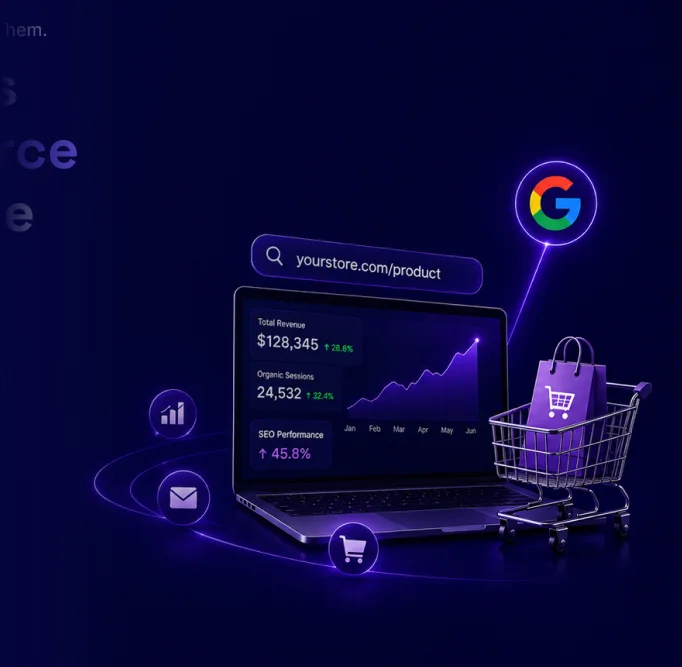












Results from Kapissh Curtains, a UniBright ecommerce seo client
Organic Traffic Growth
More Organic Revenue
Lower Cost Per Acquisition vs. Paid
More Indexed Product Pages
Thin descriptions, duplicate manufacturer copy, and missing metadata mean Google can’t tell your product pages apart from a thousand competitors — so it doesn’t rank them.
Deep click paths and messy URL structures waste crawl budget on duplicate and out-of-stock pages instead of the category pages that actually convert.
Slow page speed, unindexed pages, broken canonicals, and crawl traps quietly cap how much of your catalog Google will ever show — and most stores have never run an ecommerce technical SEO audit.
If organic traffic, rankings, and revenue per page aren’t tracked, ecommerce SEO becomes a guess — and the first budget line cut.
Without product, review, and price schema markup, your listings lose rich snippets — and the chance of being cited in Google AI Overviews and AI search answers at all.

As a full-service ecommerce SEO agency in the USA, UniBright combines technical SEO, on-page optimization, content, and AI search optimization into one program — so your product and category pages rank in Google, appear in AI Overviews, ChatGPT, and Gemini, and drive organic revenue on Shopify, WooCommerce, and custom stores.

A full technical, on-page, and competitive audit turned into a prioritized roadmap — so every fix is tied to rankings, indexation, and organic revenue.
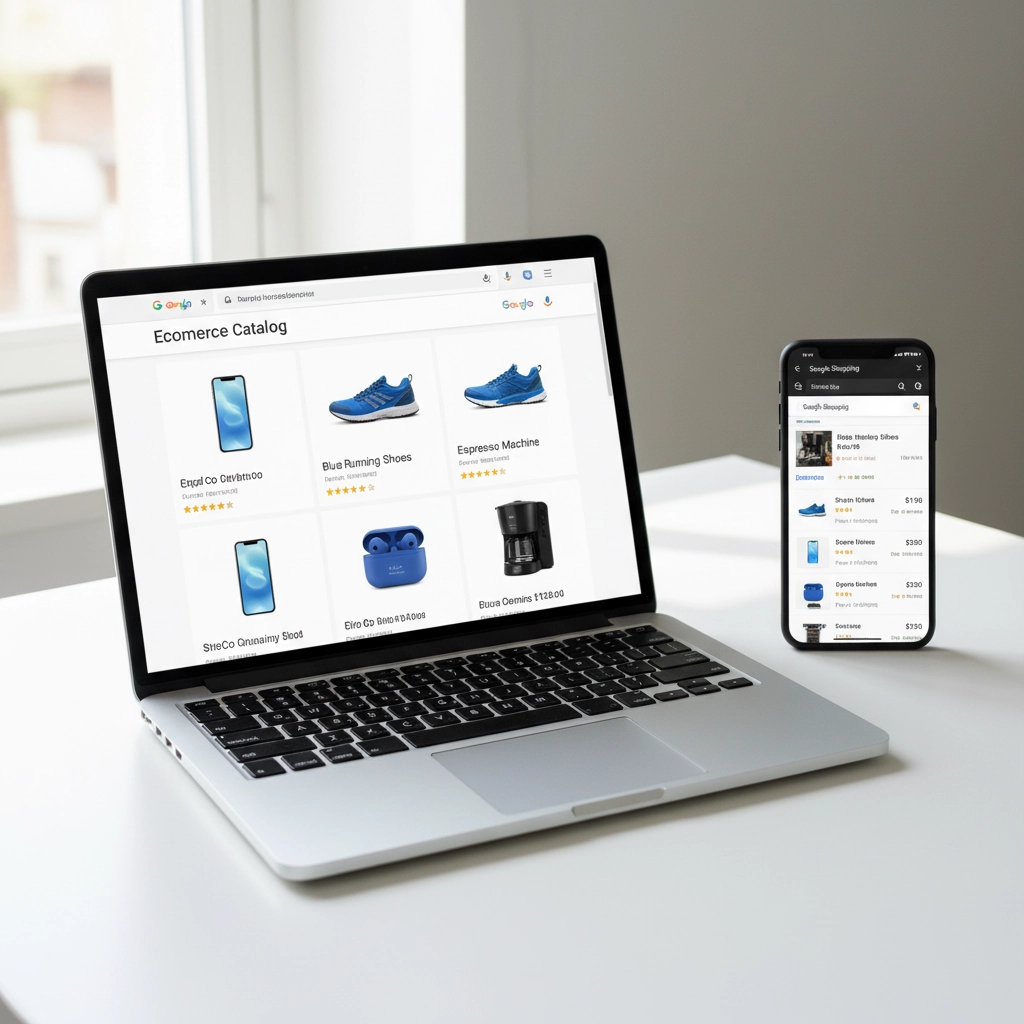
Site speed, crawlability, indexation, canonicalization, faceted navigation fixes, and Core Web Vitals work so Google can actually read your catalog.

Unique, search-intent-matched product descriptions, optimized titles and meta tags, and image SEO that help each SKU rank and convert.

Keyword-mapped category pages and clean product taxonomy that capture commercial intent and guide shoppers to the products that sell.

Mapping high-, medium-, and low-competition keywords across products, categories, and supporting content so you win demand at every stage.

Product, review, breadcrumb, and FAQ schema that unlock rich snippets and improve visibility in Google AI Overviews and AI search answers.

Buying guides, comparison content, and digital PR that earn backlinks and answer the questions your customers are already asking search engines and AI assistants.

A monthly report covering organic traffic, rankings, indexation, and — most importantly — organic revenue, plus a clear plan for what to do next.

Using AI tools for keyword discovery, catalog audits, and content drafting, with every optimization reviewed and approved by a human SEO strategist before it goes live.
eCommerce SEO is the practice of optimizing an online store so product, category, and content pages rank in organic search and convert shoppers into buyers. It covers technical foundations, on-page work across large catalogs, schema markup, and content that matches commercial search intent — including visibility in Google AI Overviews and AI assistants.
Organic search compounds over time and often delivers the highest-intent traffic to an online store. Strong ecommerce SEO lowers dependence on paid ads, improves product discoverability, and builds durable visibility across Google and AI search surfaces — so revenue grows without resetting your cost per acquisition every month.
Start with a full technical audit to fix crawlability, indexation, and site speed issues. Then rewrite thin product descriptions, strengthen category pages, improve internal linking, add product schema, and build supporting content that answers buyer questions. Track organic revenue — not just rankings — so every improvement ties back to sales.
Ranking a Shopify store starts with fixing issues the platform makes easy to overlook: duplicate content, thin default collection pages, and app bloat that slows the site. Add unique descriptions, clean URL and navigation structure, schema markup, and content that matches search intent — then work within Shopify’s constraints instead of fighting them.
Product page SEO starts with unique, benefit-driven descriptions instead of manufacturer copy. Optimize titles and meta descriptions for intent, add image alt text, implement product schema for variants and price, and use internal links from categories and guides so Google understands how each SKU fits your catalog.
Ecommerce technical SEO covers the infrastructure that determines whether Google can crawl, index, and rank your store at all — site speed, Core Web Vitals, mobile usability, canonical tags, sitemaps, and faceted navigation. Without that foundation, product and category content never get a fair chance to rank.
Most ecommerce SEO programs show early technical and indexation improvements within the first one to two months, meaningful ranking and traffic movement between months three and six, and compounding organic revenue growth over six to twelve months — depending on catalog size, competition, and how quickly fixes are shipped.
Costs for ecommerce SEO services vary based on catalog size, how much technical debt exists, and whether the scope covers technical SEO only or a full program with content and link building. UniBright builds custom proposals around your store’s goals, platforms, and revenue targets — not a one-size template.
Working with an ecommerce SEO agency gives you a full team — technical specialists, content writers, and link builders — instead of one generalist. You get established processes, platform experience across Shopify and WooCommerce, and reporting tied to organic revenue so SEO stays accountable to growth.
Shopify, WooCommerce, Magento, and BigCommerce can all rank well — the platform matters less than how it’s configured. Shopify is easiest to start but has technical limits; WooCommerce offers more control with more setup work. UniBright optimizes whatever stack you run so crawlability, schema, and content work together.